
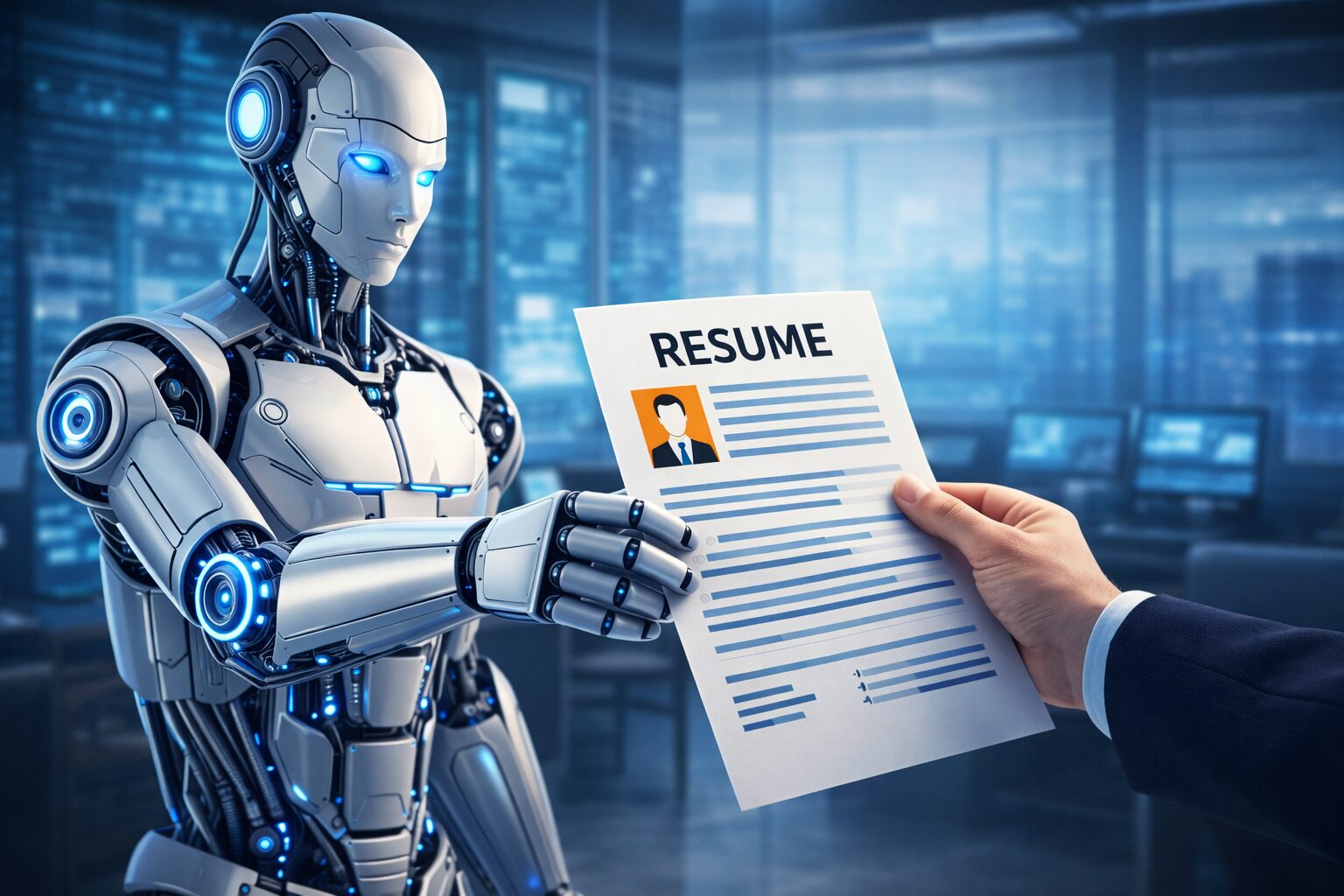
One of the challenges of talking about AI in technical communication right now is that too many conversations remain either too abstract or too simplistic. We hear that AI is changing hiring. We hear that résumés now need to be “optimized” for machines. We hear that applicant tracking systems are reading our documents long before any human does.
All of that is true, at least in part. But it is not always especially helpful.
What is often missing from these conversations is a more usable framework for understanding what AI is actually doing to résumé writing and how technical communicators might respond in ways that are both practical and critical. That is one reason I found Huiling Ding’s article, “Using the AI Life Cycle to Unblackbox AI Tools: Teaching Résumé 2.0 with Résumé Analytics and Computational Job-Résumé Matching”, so useful. Ding’s article offers a strong framework for thinking about using AI for resumes, not just as a matter of prompting tools more effectively, but as a way to understand the larger systems that now shape how résumés are processed, matched, and evaluated.
For technical communication professionals, that matters. And for teachers working with students preparing to enter an increasingly algorithmic job market, it matters even more.
Why This Article Matters for Technical Communicators
What Ding does especially well in this article is move the discussion away from résumé “tips” and toward infrastructure. Rather than treating AI as a black box we simply have to accommodate, she argues that instructors, students, and job seekers need better ways of understanding how these systems work in the first place. The article focuses on automated résumé screening and matching systems, noting that AI-mediated hiring has transformed résumé evaluation by converting documents into structured data and ranking candidates through algorithmic matching.
That shift has important implications for technical communicators.
For practitioners, it means using AI for resumes is not just about asking ChatGPT to rewrite a bullet point. It means understanding that résumés may now be read first by systems that parse, extract, normalize, classify, and score information in ways that differ substantially from how human readers make sense of documents. For teachers, it means traditional rhetorical advice about audience and purpose still matters, but it now has to be extended to include what John Gallagher has called algorithmic audiences, a term Ding explicitly engages.
That is where this article becomes particularly valuable: it gives us a way to think about résumé writing that is both more realistic and more teachable.
The Basic Framework: the AI Life Cycle
At the center of Ding’s article is a modified version of the AI life cycle, adapted from CRISP-DM. She presents six major stages: business understanding, data understanding, data preparation, model development, model evaluation, and deployment. The point is not simply to map a technical process. It is to show that AI systems emerge from a chain of decisions about goals, data, features, validation, and implementation, all of which shape outcomes.
That framework is useful because it helps demystify what many people mean when they talk about AI in hiring.
At the business understanding stage, the system is not neutral. It begins with organizational goals, such as reducing hiring time, processing high application volume, or ranking candidates more efficiently. At the data understanding and data preparation stages, job ads and résumés are collected, cleaned, structured, and converted into forms that machines can process. At the model development stage, features are engineered and weighted, which means certain experiences, skills, and terms become more legible and more valuable than others. Then comes evaluation and deployment, where systems are tested, integrated, and maintained, often with limited transparency for the people being judged by them.
For anyone interested in using AI for resumes, this is a much better starting point than the usual advice to “add keywords” and hope for the best.
What This Looks Like in Practice
One of the most compelling parts of the article is Ding’s translation of the framework into a practical résumé assignment. She outlines an eleven-step computational job-résumé matching project in which students collect job ads, clean the data, analyze top words, generate résumé analytics, compare job and résumé keywords, revise their résumés, and then experiment with AI-assisted revision.
In other words, the framework is not just theoretical. It becomes a method.
Students begin by identifying job titles and gathering postings from online job boards. They then clean and section those postings, import the text into AntConc, remove stop words, generate high-frequency terms, and use stemming and lemmatization to compress language into more analyzable forms. After that, they repeat similar procedures for their own résumés, compare the two sets of top terms, identify mismatches, and revise accordingly. Ding then adds an optional AI-assisted revision stage using zero-shot, few-shot, and step-by-step prompts, followed by reevaluation.
What I like about this approach is that it reframes using AI for resumes as an iterative process of analysis, interpretation, and revision. AI is not presented as a magic tool for instantly producing a better résumé. Instead, it becomes one part of a broader workflow that includes data literacy, rhetorical judgment, and critical reflection.
Why This Framework Works for Both Practitioners and Teachers
What makes Ding’s article especially useful is that the framework works on at least two levels.
For practitioners, it offers a more grounded way to think about résumé revision. Instead of relying on vague advice about ATS optimization, job seekers can examine actual job postings, identify recurring concepts, compare those concepts to their own documents, and revise more intentionally. That is a much stronger approach to using AI for resumes because it connects revision to real labor-market texts rather than generic prompts or résumé templates.
For teachers, the article offers a model for bringing AI literacy, data literacy, and ethical reflection into résumé pedagogy. Ding explicitly argues that the AI life cycle can help students move from being naïve users of AI tools to becoming critical thinkers and responsible practitioners. She also shows how every phase of the life cycle has pedagogical value, from analyzing business motivations and training data to questioning evaluation metrics, access, and bias.
That strikes me as especially important for technical communication.
If our field is serious about preparing students and professionals to communicate in AI-mediated workplaces, then résumé instruction has to evolve. We cannot simply teach résumé writing as though the only audience is a hiring manager reading a document in isolation. Nor can we treat AI as a purely technical issue. The systems shaping hiring are rhetorical, organizational, and ethical systems, too.
The Ethical Dimension Matters, Too
Another reason this article stands out is that Ding does not treat the mechanics of automated screening as separate from questions of power and bias. She highlights the ways automated résumé screening can reinforce existing inequities through biased historical training data and opaque decision-making. She also notes that features such as names, gender markers, zip codes, educational background, and employment gaps can all become sites of algorithmic discrimination.
That matters because using AI for resumes should not mean simply learning how to please a machine. It should also mean understanding the costs of systems that reduce candidates to patterns, frequencies, and weighted categories. Ding is especially strong on this point. Her argument is not just that we need smarter résumé strategies. It is that we need pedagogies and professional practices that help people understand what is being lost when automated systems mediate access to work.
For technical communicators, that is a familiar concern. We have long been interested in the relationship between usability, access, ethics, and institutional systems. AI-mediated hiring is another place where those concerns need to be brought to bear.
What Technical Communicators Can Take from This
If I had to summarize why I think this article is so useful, it is this: Ding offers a framework for using AI for resumes that is analytical rather than magical.
She shows that better résumé writing in the age of AI depends on understanding the lifecycle behind automated decision-making, not just the outputs those systems produce. She gives teachers a classroom-ready model for making that lifecycle visible. And she gives practitioners a more practical way to approach résumé revision by pairing AI-assisted writing with job analytics, résumé analytics, and critical reflection.
For technical communication professionals, that is exactly the kind of framework we need more of right now.
Not because it makes AI less complicated. But because it helps us engage that complexity more productively.